Karate
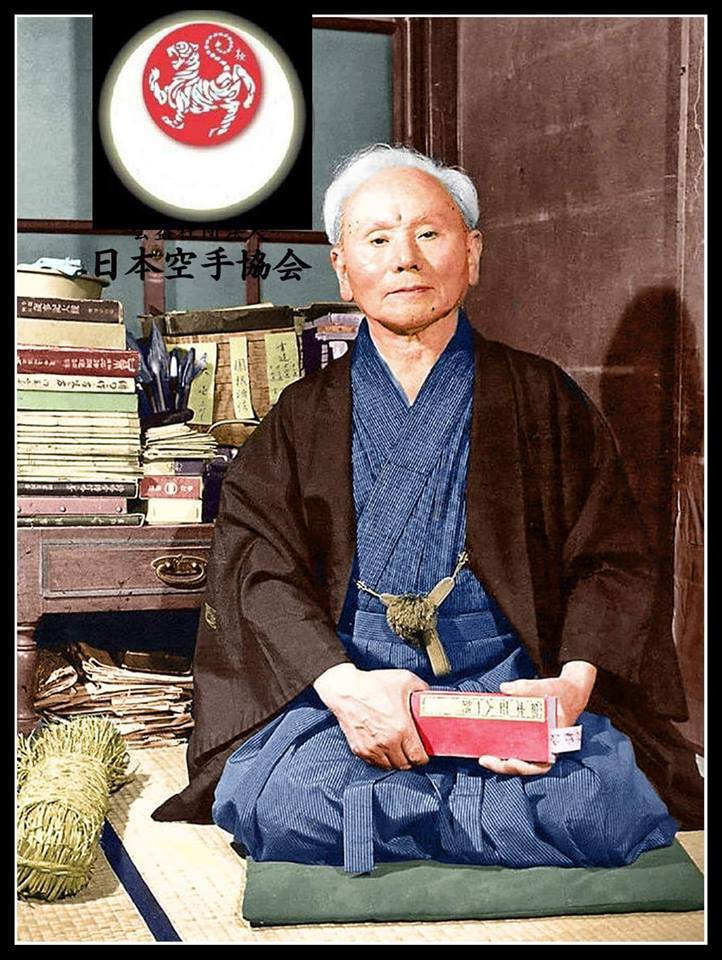
Philosophy
Karate is more than fighting or sport. For many karateka, it is also a path, a way of life, to work on oneself - physically and mentally.
The well-known term “Karate-Dō” means “The Way of the Empty Hand.” Karate originally developed in Okinawa and was influenced by various martial arts. In times when weapons were forbidden for the common people, people learned to defend themselves using only their bodies - often in secret.
However, Karate is not only about techniques. Attitude, self-control, and the proper way of dealing with oneself and others are just as important.
To truly internalize Karate, a karateka must learn to empty the mind. A "full mind" is no longer ready to focus on new things. A "full mind" cannot act responsibly in every situation.
The goals of a karateka are the development of one's own character through self-control, concentration, and inner calm.
Through training, one learns to remain controlled even under stress and to work on oneself step by step. A true karateka constantly works on improving both mentally and physically. The path itself is therefore the real goal of the martial arts.
However, there is not only one single Karate philosophy. Every style, dojo, and master places emphasis on different aspects. Some focus more on competition, others on tradition, self-defense, or personal development.
For this reason, almost every Karate club has its own philosophy, usually shaped by the master who teaches there. That philosophy may come from the master's own teacher or may have developed through life experience. Naturally, philosophy also depends on the Karate style practiced within a dojo.
Nevertheless, all these philosophies share common roots. The oldest influences reach from India through China to Okinawa and later Japan. Through trade, cultural exchange, and generations of teachers, today's martial arts and ways of thinking gradually developed.
Below are some principles that are widespread in many Karate styles:
- Mutual respect without prejudice and without regard to rank or status. The master respects the student just as the student respects the master.
- To learn and practice Karate, age, gender, religion, beliefs, or physical condition do not matter.
- Karate serves to develop and control oneself as a whole: body, breathing, mind, emotions, discipline, and much more.
- A karateka should remain humble, calm, and peaceful, and should not be carried away by provocation.
- However, being peaceful does not mean accepting everything. If someone intentionally wants to harm, exploit, or attack others, one should possess the strength to defend oneself and set clear boundaries.